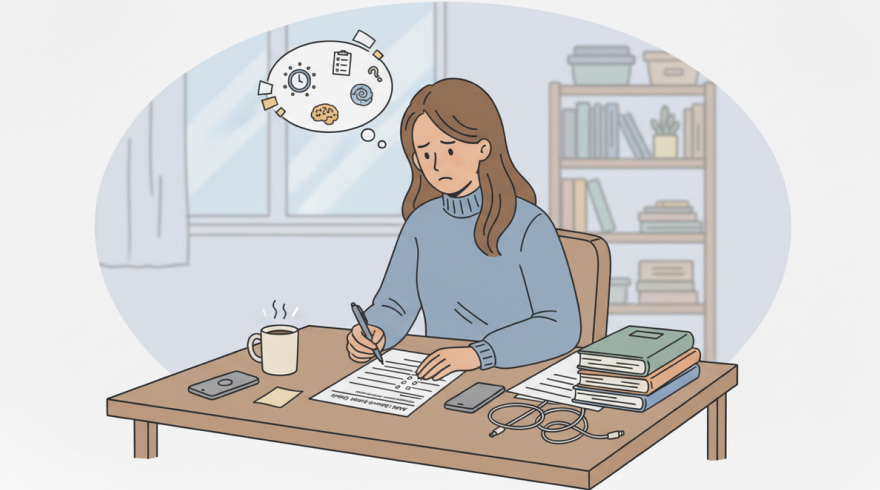
Online ADHD Testing for Adults: A Complete Guide to Smart and Effective Screening
- 30 December 2025

Why Adults Explore Digital ADHD Screening and How It Fits Into Modern Care
Attention challenges can blur the line between everyday distraction and a clinical pattern that disrupts work, relationships, and well‑being. Many adults arrive at this moment after years of coping strategies that only partially help, or because demands at work and home have intensified. Digital screening is appealing because it is private, convenient, and available when a lunch break or a late evening is the only window you have. Done correctly, it complements, not replaces, professional evaluation and ongoing care.
Time, travel, and cost barriers often delay a first step, which adds unnecessary frustration for people who are already juggling a heavy cognitive load. That is why options like online ADHD testing for adults can shorten the path to clarity while maintaining structure, validity, and a clear plan for what to do next. When you understand what these tools measure and how to interpret scores, you can move from vague concern to targeted action.
The journey is rarely linear, and a single score should not define you; instead, trends across symptom clusters and functional impact offer the most insight. In many cases, initial screening paves the way to a confirmed understanding through adult ADHD diagnosis online, which can bridge you to in‑person services or ongoing telehealth follow‑up. A thoughtful approach protects your privacy, respects your time, and sets reasonable expectations about what digital assessments can and cannot do.
- Reduced stigma through discreet screening at home
- Structured questionnaires aligned with clinical criteria
- Guided next steps that point toward confirmation and care
- Educational feedback that demystifies symptoms and supports self‑advocacy
How Digital ADHD Screenings Work, From Questionnaires to Next Steps
Well‑designed platforms combine validated questionnaires, adaptive logic, and clear explanations that create a streamlined experience. The process typically begins with demographic context, followed by symptom frequency, impairment, and history of patterns since childhood. Effective tools also surface co‑occurring concerns, sleep, anxiety, mood shifts, substance use, because those factors can mimic or magnify attention difficulties. The outcome is more than a number; it is a structured snapshot you can share with a clinician.
Most services start with a quick screener and then expand into a deeper battery when responses indicate meaningful impairment. In that flow, you may come across an adult ADHD test online that aligns item wording with established scales, uses norm‑referenced scoring, and flags red‑alert responses that require prompt professional follow‑up. The most credible tools disclose their evidence base, limitations, and how they safeguard your data.
| Step | What to expect | Typical time |
|---|---|---|
| Brief screener | 5–7 targeted items to gauge likelihood and severity | 3–5 minutes |
| Comprehensive items | In‑depth questions on inattention, hyperactivity, and impairment | 10–20 minutes |
| Context checks | History since childhood, school/work impact, sleep, mood, and anxiety | 5–10 minutes |
| Feedback | Plain‑language summary and guidance for confirmation and care | Instant |
Quality platforms encourage reflection, not rush, and they clarify that a positive screen is a starting point. If you prefer to begin with a quick snapshot, a well‑built online test for ADHD for adults can calibrate expectations and suggest whether a comprehensive evaluation is warranted. Keep notes about real‑world examples, missed deadlines, task‑switching issues, restlessness, so you can provide vivid context later.
- Use a quiet space and disable notifications during the assessment
- Answer based on typical weeks, not unusual outliers
- Invite a partner or colleague perspective when offered by the platform
- Save your report to discuss with a licensed professional
Interpreting Results, Confirming a Diagnosis, and Mapping Next Steps
Screening scores are most meaningful when paired with a timeline of symptoms across settings and life stages. Adults often notice variability: superb focus during urgent or stimulating tasks, yet difficulty sustaining attention for routine responsibilities. This pattern, along with impulsivity or restlessness, can affect finances, relationships, sleep, and even physical health. A careful review helps distinguish between a busy season and a chronic neurodevelopmental condition.
After your initial report, you may want to request a formal consult that validates findings and rules out near‑neighbors like untreated sleep apnea or thyroid issues. In that conversation, you can share results from an online ADHD test for adults to anchor the discussion, while planning additional history‑taking, collateral input, or cognitive screening as needed. The goal is not just a label but a functional roadmap you can implement immediately.
Once clarity emerges, many people explore habit coaching, accommodations, and medical options that are coordinated across home and work. As part of that plan, platforms that bundle evaluation with online adult ADHD treatment can simplify logistics, provide ongoing check‑ins, and adjust strategies as your responsibilities evolve. Measured follow‑through, sleep hygiene, task design, medication trials where appropriate, turns insight into sustained progress.
- Translate scores into daily experiments: timers, routines, environmental tweaks
- Document which strategies reduce friction and which create new friction
- Share concrete wins and obstacles at follow‑ups to fine‑tune your plan
Benefits, Limitations, and the Science Behind Remote Assessments
Digitally delivered assessments increase reach, especially for people in rural areas or those balancing caregiving, multiple jobs, or irregular schedules. The best platforms are built on validated symptom inventories, clear impairment metrics, and transparent limits. They aim to reduce friction while preserving clinical rigor, using branching logic to avoid irrelevant questions and educational feedback to make results actionable.
Because attention symptoms overlap with other conditions, a trustworthy pathway includes screening for mood, trauma, sleep disorders, and substance use. In this broader context, an initial online ADHD assessment for adults is most effective when it identifies possible confounders that should be addressed in parallel. Clarity grows when data points accumulate across tools, time, and real‑world functioning, not from any single checkbox.
Regulatory standards and practice guidelines continue to evolve, and many providers blend telehealth and in‑person elements for balance. When platforms add clinical intake, collateral history, and follow‑up visits, an online ADHD assessment for adults can meet high bars for safety and quality. Still, measured skepticism is healthy: look for licensed oversight, evidence citations, and clear escalation pathways for complex cases.
- Strengths: accessibility, speed, structured feedback, and practical next steps
- Constraints: self‑report bias, overlap with other conditions, and variable platform quality
- Safeguards: encryption, consent transparency, and clinician availability when risks emerge
Choosing Providers, Protecting Privacy, and Ensuring Quality
Selecting a service is easier when you know what excellent looks like. Credible platforms list clinician credentials, cite validated scales, publish privacy practices, and provide clear contacts for support. They present nuanced educational content, avoiding sensational claims or one‑size‑fits‑all promises. Importantly, they acknowledge that ADHD is heterogenous and often coexists with anxiety, depression, and learning differences.
As you compare options, look for integrated care models that connect screening, diagnosis, and ongoing support. Some services coordinate therapy, skills coaching, and medication, and that continuum can pair evaluation with online ADHD treatment for adults that is responsive to your goals and schedule. When you see iterative tracking and outcomes dashboards, you know the team is serious about measuring impact.
Verification of identity, consent for information sharing, and safe storage of health data should be easy to understand. If a platform outlines how a clinician confirms eligibility and discusses risks and benefits, it becomes a safer place to pursue ADHD diagnosis for adults online through a structured, ethical process. Transparency builds trust, and trust is the foundation of effective care.
- Green flags: licensed oversight, clear evidence, and thoughtful boundaries
- Red flags: instant diagnoses with no history‑taking or collateral input
- Must‑haves: encryption, data minimization, and plain‑language consent
Faq: Online ADHD Testing for Adults
How accurate are digital ADHD screeners for adults?
Well‑researched tools demonstrate good sensitivity for identifying patterns that deserve a closer look, but no online tool can replace a comprehensive clinical evaluation. Accuracy increases when you pair results with history from school, work, and family, and when a licensed professional interprets scores in context. Many people start with an online ADHD test for adults free to get oriented, and then pursue confirmation with a clinician who can rule out other causes.
Can I get a formal diagnosis entirely through telehealth?
In many regions, licensed clinicians can complete a full evaluation using secure video, structured interviews, and validated questionnaires, sometimes with in‑person options if red flags appear. The exact process depends on local regulations, your medical history, and provider protocols. When criteria are met and risks are managed, some programs offer an online adult ADHD diagnosis that includes documentation you can share with work or school.
What should I prepare before taking a digital assessment?
Gather a timeline of symptoms, report cards or performance reviews, and examples that illustrate everyday impact across home and work. Ask a trusted person who knows you well to share observations, because outside perspectives can reveal blind spots. Plan a quiet time, minimize interruptions, and answer based on typical weeks rather than exceptional days to improve the usefulness of the results.
How do these tools handle co‑occurring conditions?
Quality platforms include screening items for mood, anxiety, sleep, and substance use, and they flag responses that suggest you need an immediate clinical conversation. If responses indicate risk or complexity, the tool should direct you to appropriate care levels. A comprehensive pathway integrates evaluation with follow‑up that treats the whole picture instead of prematurely narrowing on one label.
What happens after I finish the assessment?
Most services provide a summary that translates scores into plain language and suggests next steps you can take right away. You may receive guidance for sharing information with a clinician who can confirm the diagnosis, discuss treatment options, and help you map goals. Save your report, note examples from daily life, and schedule a follow‑up so momentum turns into meaningful change.
Latest News
-
![A Comprehensive Guide to Adult Attention Challenges Screening and How It Helps]() A Comprehensive Guide to Adult Attention Challenges Screening and How It Helps Online ADHD Test for Adults: Understand Your Symptoms Get Started What an Adult ADHD Screening Really Involves and Why It Matters Attention issues in adulthood can feel elusive: one week you’re productive, the next you’re overwhelmed by open tabs, missed messag...
A Comprehensive Guide to Adult Attention Challenges Screening and How It Helps Online ADHD Test for Adults: Understand Your Symptoms Get Started What an Adult ADHD Screening Really Involves and Why It Matters Attention issues in adulthood can feel elusive: one week you’re productive, the next you’re overwhelmed by open tabs, missed messag... - 5 January, 2026
-
![Adult ADHD Assessment: A Comprehensive Guide to Evaluation of Attention Difficulties]() Adult ADHD Assessment: A Comprehensive Guide to Evaluation of Attention Difficulties Online ADHD Test for Adults: Understand Your Symptoms Get Started Understanding Why an Adult Evaluation Matters and What It Actually Includes Far from a childhood-only concern, attention differences in grown-ups often masquerade as missed deadlines, impulsive decisions, an...
Adult ADHD Assessment: A Comprehensive Guide to Evaluation of Attention Difficulties Online ADHD Test for Adults: Understand Your Symptoms Get Started Understanding Why an Adult Evaluation Matters and What It Actually Includes Far from a childhood-only concern, attention differences in grown-ups often masquerade as missed deadlines, impulsive decisions, an... - 2 January, 2026
-
![Comprehensive Guide to Adult ADHD Quiz: Make Sense of Your Focus and Energy]() Comprehensive Guide to Adult ADHD Quiz: Make Sense of Your Focus and Energy Online ADHD Test for Adults: Understand Your Symptoms Get Started What a Modern Self-Screen Can Reveal About Your Everyday Mind Understanding attention differences in adulthood often begins with a simple self-check. Many people notice they can juggle big ideas yet misplace...
Comprehensive Guide to Adult ADHD Quiz: Make Sense of Your Focus and Energy Online ADHD Test for Adults: Understand Your Symptoms Get Started What a Modern Self-Screen Can Reveal About Your Everyday Mind Understanding attention differences in adulthood often begins with a simple self-check. Many people notice they can juggle big ideas yet misplace... - 1 January, 2026