ADHD Self-Report Scale: A Complete Guide to Understanding
- 29 December 2025

How a Self-Report Tool Can Clarify Symptoms
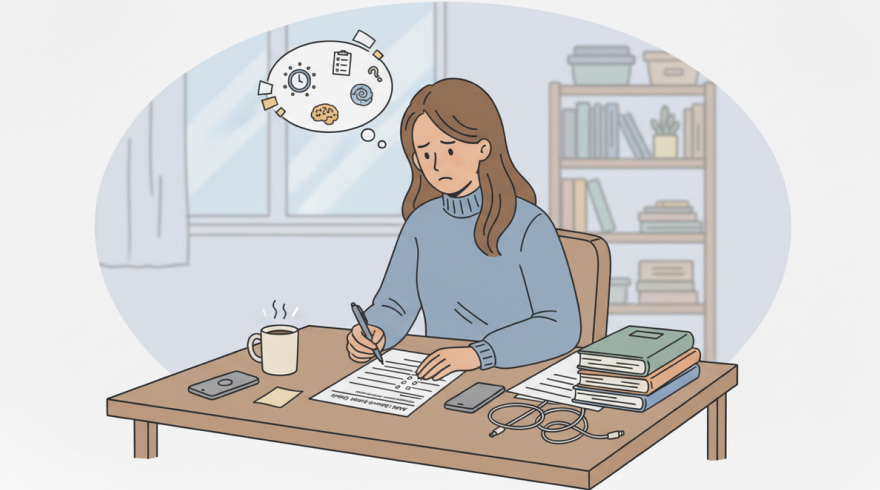
Attention challenges, procrastination patterns, and a lifelong trail of half-finished plans can feel confusing in adulthood. Many people sense the signal beneath the noise but struggle to name it, especially when masking strategies have worked for years. A structured questionnaire offers a calm, methodical way to inventory experiences across work, home, and relationships, turning vague impressions into specific, trackable clues. Rather than guessing, you can observe how often certain behaviors occur and how consistently they disrupt daily functioning.
Self-screening does not diagnose, yet it can be a strong catalyst for productive conversations with professionals. Many adults use the adult ADHD self-report scale to begin a conversation with a clinician, opening the door to appropriate assessment and support. The process is quick, noninvasive, and respectful of your time and privacy, and it transforms a swirling story into a clear snapshot.
Good screening tools translate lived experience into plain language without minimizing nuance or context. Alongside goal setting and journaling, the adult ADHD self-assessment provides a consistent format to reflect on symptoms before and after life changes. That simple ritual helps you notice patterns and track the impact of sleep, stress, and environmental tweaks.
- Capture frequency, not just intensity, for a reliable baseline.
- Compare responses over weeks to illuminate trends.
- Pair the results with a professional visit to clarify next steps.
How the Checklist Is Structured, What It Measures, and When to Use It
Modern adult screening checklists emphasize brevity, clarity, and real-world relevance. The instrument typically divides questions into two sections, with the first portion optimized for quick identification of likely cases. Items focus on attention regulation, disorganization, forgetfulness, impulsive decision making, and the downstream effects of these traits on productivity and relationships. You answer using a frequency scale from “never” to “very often,” which helps separate occasional lapses from persistent patterns that merit follow-up.
Clinicians, researchers, and telehealth programs have popularized a standardized layout to streamline triage and reduce wait times. The widely cited adult ADHD self-report scale ASRS-v1.1 symptom checklist organizes questions into two parts for efficient triage, while preserving nuance through everyday examples. In practice, that structure lets busy adults complete the screening in minutes and still produce information that is actionable for care teams.
Clear wording and consistent anchors make the results easier to interpret across settings. Many healthcare teams reference the adult ADHD self-report scale ASRS when building intake workflows, because familiar item formats cut down on confusion during appointments. If you complete the questionnaire at home first, you can carry those insights into your visit and avoid forgetting key details.
| Component | What it captures | Items/Time | Practical use |
|---|---|---|---|
| Part A | High-yield symptoms likely to indicate the need for a full evaluation | 6 items / ~2 minutes | Fast triage for primary care, coaching intakes, or telehealth portals |
| Part B | Broader functional impact and situational variation across life domains | 12 items / ~4–5 minutes | Context for goal setting, workplace adjustments, and longitudinal tracking |
- Complete it when symptoms persist for several months across multiple settings.
- Repeat after major life changes to see how context shifts your responses.
- Bring results to appointments to accelerate focused, personalized care.
Benefits, Limitations, and Smart Ways to Interpret Your Results
A well-designed screening tool can be empowering, but it is not a verdict. Think of it as an instrument to illuminate patterns you might overlook in a hectic schedule. Strengths include speed, accessibility, and the ability to compare responses over time. Limitations include the influence of mood, sleep deprivation, or acute stress on how you rate items, which is why professional evaluation remains essential for diagnosis and treatment planning. Using the same wording each time reduces bias and makes changes more obvious.
Digital tools lower barriers to engagement and can make the first step feel less intimidating. Many people try an adult ADHD self-test as a private, low-stakes way to explore whether their experiences align with known symptom clusters. That single action can convert uncertainty into a dignified plan for further exploration.
Responsible use means understanding what the tool can and cannot tell you, then acting thoughtfully. For lay readers, a carefully designed self-test for ADHD for adults offers a respectful first step toward insight, especially when followed by a conversation with a qualified professional. Pair the results with input from people who know you well, because external observations often reveal patterns you may miss yourself.
- Use the same time of day and similar conditions when retesting.
- Note medications, caffeine, or sleep changes that could sway results.
- Document real examples of impact at work, school, or home to enrich context.
Scoring, Interpretation, and What Happens After a Positive Screen
Most adult tools use frequency anchors that translate to simple thresholds for initial concern. In the first section, a certain number of responses at the higher end of the scale suggests that a comprehensive assessment is warranted. The second section broadens the lens, capturing how symptoms manifest across different roles and environments. Think of the overall picture rather than any single answer, and discuss nuances with a clinician who can weigh differential diagnoses and comorbidities.
For those planning next steps, your provider may explain how adult ADHD self-report scale ASRS v1.1 scoring helps prioritize who should receive a full diagnostic evaluation promptly. This triage function improves access by channeling limited appointment slots to those who likely need them most, while also guiding others toward monitoring and supportive strategies.
Detailed item patterns can also guide practical accommodations and habit design. When reviewing responses together, some teams consult the adult ADHD self-report scale ASRS symptom checklist to link specific daily challenges with targeted interventions and coaching goals. That linkage can accelerate relief, because you move from abstract traits to concrete tweaks you can implement this week.
- Bring a summary of your top impairment areas to discuss targeted supports.
- Ask how sleep, anxiety, or thyroid issues might affect interpretation.
- Request guidance on retesting intervals to monitor change over time.
Self-Management, Environmental Design, and Professional Care
Whether you pursue therapy, coaching, or medical evaluation, small environmental adjustments can reduce friction fast. Visual cues, externalized reminders, and time-blocking often yield immediate benefits. Avoid overhauling everything at once; instead, iterate on tiny steps and keep what works. Collaboration with trusted people helps too, because accountability and shared systems lower cognitive load.
Between visits, structured routines and simple tools can amplify progress meaningfully. Between visits, structured routines and curated guides support adult ADHD self-help as you experiment safely with planners, timers, and deliberate rest. If your environment makes tasks obvious and easy to start, momentum becomes more consistent, and you’ll rely less on willpower alone.
Tracking what changes and why will speed up your learning curve and make appointments more efficient. To keep situational context visible, a reflective journal can complement the adult ADHD self-report you complete periodically during treatment. Over time, those snapshots become a personalized map of triggers, supports, and strategies that genuinely fit your life.
- Design “first steps” that are trivially small to reduce start-up friction.
- Use visual dashboards to make progress and priorities unmistakable.
- Schedule recovery time to protect focus and sustain energy across the week.
Faq: Your Top Questions Answered
Is a screening questionnaire the same as a diagnosis?
No, a screening result is not a diagnosis, and only qualified clinicians can provide one. In many clinics, staff may reference the adult ADHD self-report scale ASRS-v1.1 as a first pass to determine whether a deeper evaluation is appropriate. That step keeps the process efficient while ensuring you receive care that fits your situation.
How long does the questionnaire take to complete?
The initial portion is very quick, and the follow-up items usually take only a few minutes. Many people finish the first section in less than three minutes when the format is familiar and distractions are minimized. You can expect the full sequence to be done in under ten minutes if you focus steadily.
Should I take it alone or with someone who knows me well?
Completing it solo is fine, but getting perspective from a partner or friend can be illuminating. External observations often highlight patterns you may consider normal, even when they are unusually disruptive. Sharing examples of real-life impact will make your conversation with a professional more productive.
What if my results change from week to week?
Variability is common because sleep, stress, hormones, and workload all influence attention and impulse control. For consistent comparison, aim to complete retests under similar conditions and note anything that could sway responses. Over several checkpoints, trends usually become clearer than any single snapshot.
Can these tools help me prepare for treatment discussions?
Bringing structured information can transform a rushed appointment into a focused, collaborative session. Some patients prepare a one-page summary that blends examples, goals, and highlights from an ADHD adult self-report to guide the conversation constructively. That simple preparation step can save time and lead to more tailored recommendations.
Latest News
-
![A Comprehensive Guide to Adult Attention Challenges Screening and How It Helps]() A Comprehensive Guide to Adult Attention Challenges Screening and How It Helps Online ADHD Test for Adults: Understand Your Symptoms Get Started What an Adult ADHD Screening Really Involves and Why It Matters Attention issues in adulthood can feel elusive: one week you’re productive, the next you’re overwhelmed by open tabs, missed messag...
A Comprehensive Guide to Adult Attention Challenges Screening and How It Helps Online ADHD Test for Adults: Understand Your Symptoms Get Started What an Adult ADHD Screening Really Involves and Why It Matters Attention issues in adulthood can feel elusive: one week you’re productive, the next you’re overwhelmed by open tabs, missed messag... - 5 January, 2026
-
![Adult ADHD Assessment: A Comprehensive Guide to Evaluation of Attention Difficulties]() Adult ADHD Assessment: A Comprehensive Guide to Evaluation of Attention Difficulties Online ADHD Test for Adults: Understand Your Symptoms Get Started Understanding Why an Adult Evaluation Matters and What It Actually Includes Far from a childhood-only concern, attention differences in grown-ups often masquerade as missed deadlines, impulsive decisions, an...
Adult ADHD Assessment: A Comprehensive Guide to Evaluation of Attention Difficulties Online ADHD Test for Adults: Understand Your Symptoms Get Started Understanding Why an Adult Evaluation Matters and What It Actually Includes Far from a childhood-only concern, attention differences in grown-ups often masquerade as missed deadlines, impulsive decisions, an... - 2 January, 2026
-
![Comprehensive Guide to Adult ADHD Quiz: Make Sense of Your Focus and Energy]() Comprehensive Guide to Adult ADHD Quiz: Make Sense of Your Focus and Energy Online ADHD Test for Adults: Understand Your Symptoms Get Started What a Modern Self-Screen Can Reveal About Your Everyday Mind Understanding attention differences in adulthood often begins with a simple self-check. Many people notice they can juggle big ideas yet misplace...
Comprehensive Guide to Adult ADHD Quiz: Make Sense of Your Focus and Energy Online ADHD Test for Adults: Understand Your Symptoms Get Started What a Modern Self-Screen Can Reveal About Your Everyday Mind Understanding attention differences in adulthood often begins with a simple self-check. Many people notice they can juggle big ideas yet misplace... - 1 January, 2026